
Streamlining Procurement to Keep Construction Moving
We bring structure to construction operations to reduce delays and control costs.
Client
A leading general contractor delivering one of the largest shopping mall construction projects in the country.
As project scale and complexity increased, existing procurement processes could no longer support operational demands. Manual coordination, fragmented communication, and limited transparency began creating delays and operational risks.
To maintain delivery timelines and control procurement complexity, the company decided to digitize and streamline procurement operations.
Challenge
The procurement process relied on disconnected tools and manual coordination:
- Tendering managed through Excel spreadsheets and email communication
- Procurement teams manually communicating with each supplier
- Critical decisions made without documented workflows or approval history
- Limited contractor transparency, creating opportunities for human error
- Procurement information scattered across multiple systems and document formats
- Significant time spent requesting missing information and consolidating data
These inefficiencies increased the risk of schedule delays, budget overruns, and operational losses.
Solution
We implemented a unified procurement ecosystem that centralised procurement workflows into a single digital platform.
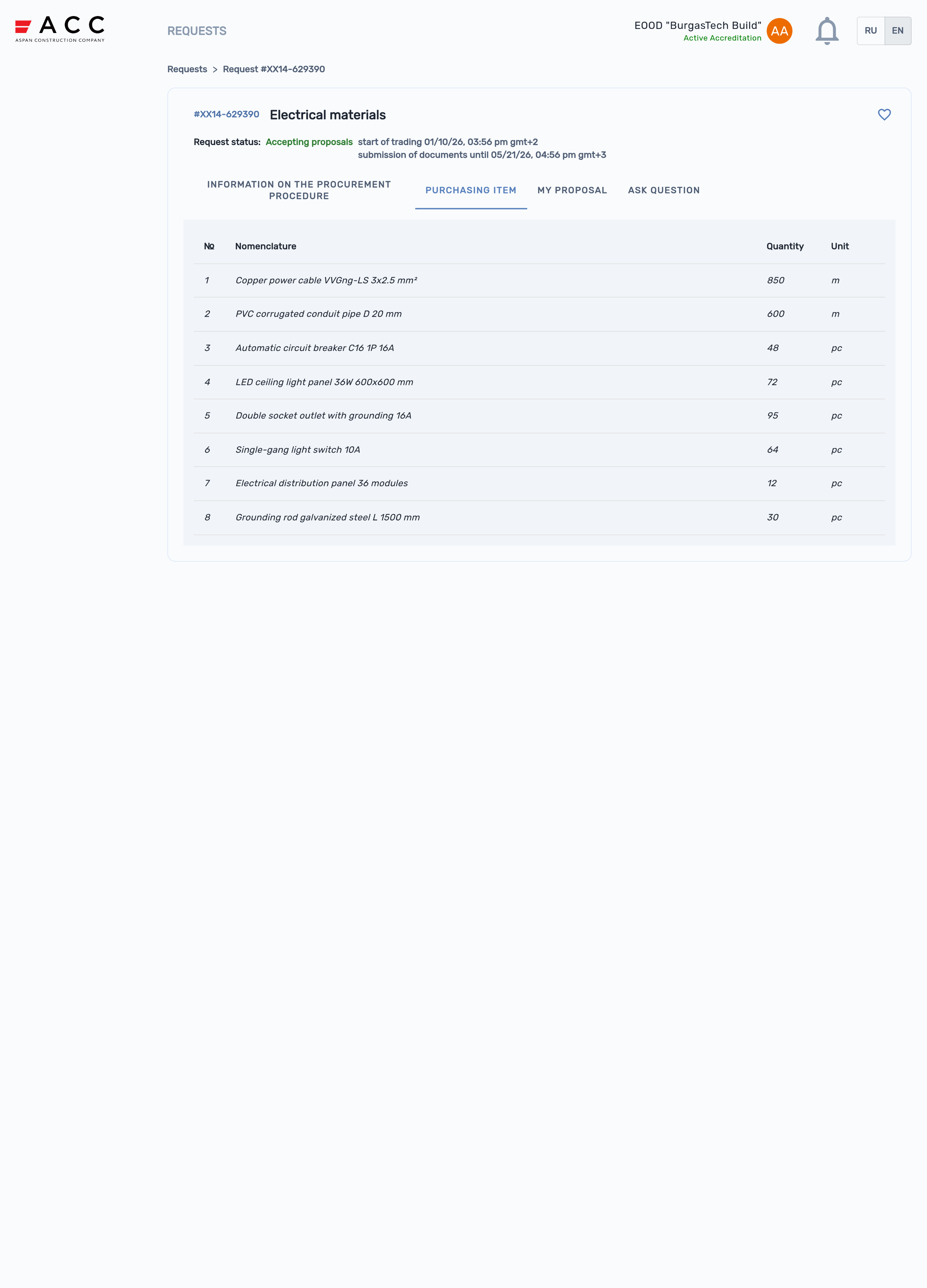
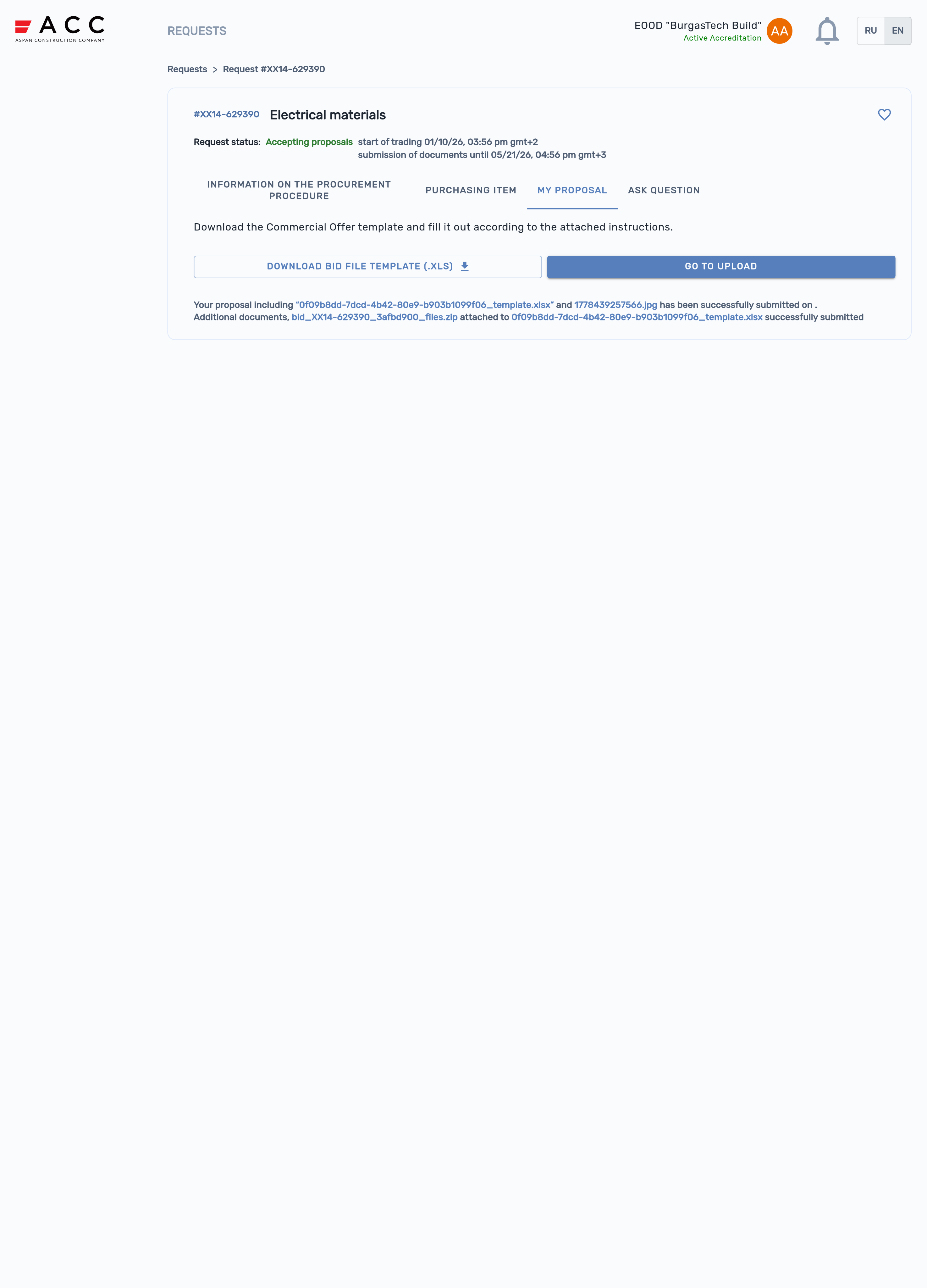
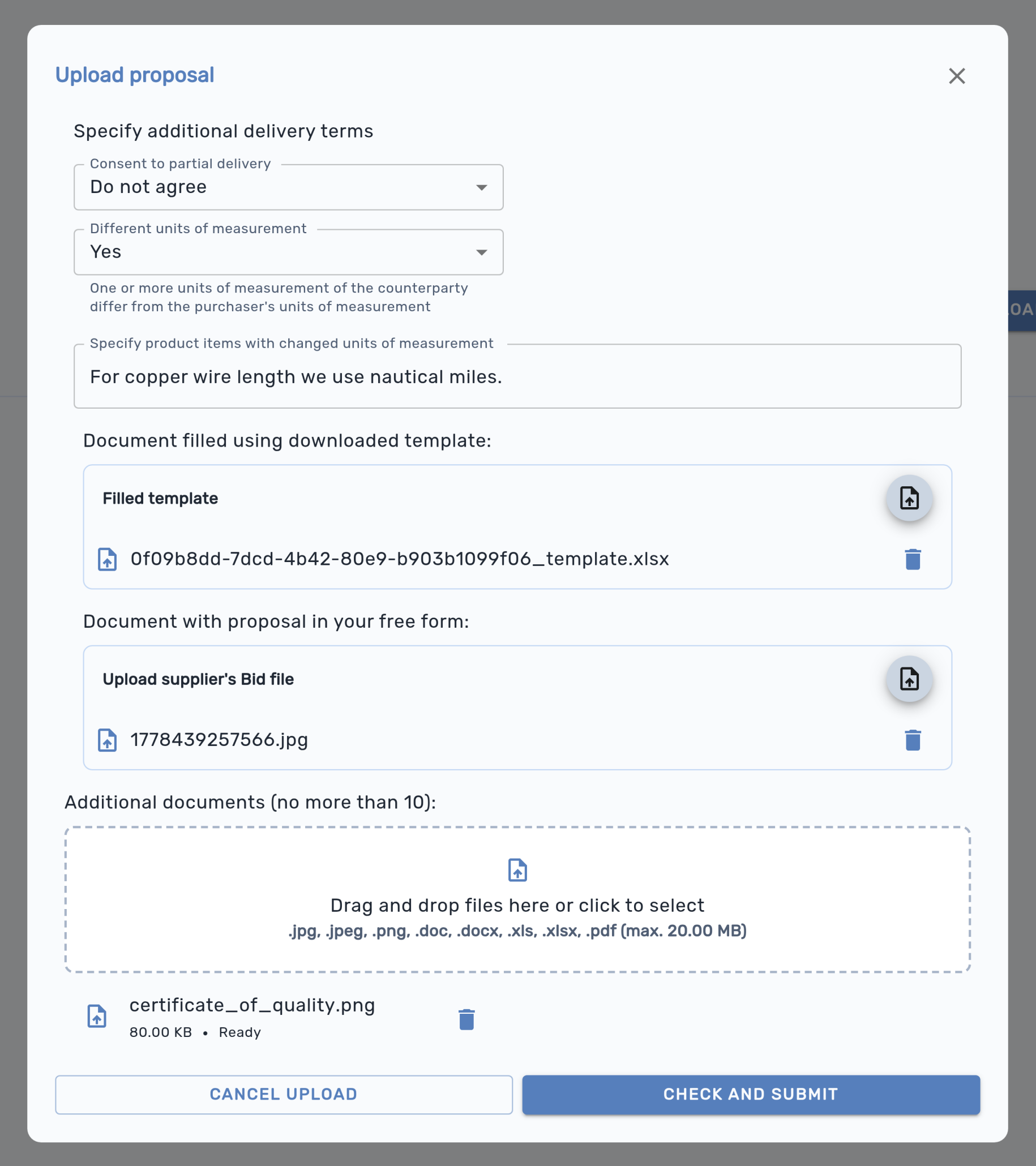
The platform includes:
- Centralized management of active and completed procurements
- Digital tender management and bid submission workflows
- Structured communication between procurement teams and suppliers
- Anonymous bidding to ensure fair contractor selection
- Open and closed tender mechanisms
- Full visibility into procurement decisions for procurement and security teams
- Standardized documentation and procurement records
Result
-
Faster procurement cycles
Decision-making accelerated through standardized workflows and reduced manual coordination.
-
Construction schedules protected
Procurement no longer slowed down construction and installation activities.
-
Enhanced transparency and control
All procurement decisions became traceable, documented, and auditable.
-
Reduced operational risk
Manual intervention and non-transparent supplier selection practices were eliminated.
-
Improved efficiency
Teams spent less time coordinating information and more time moving projects forward.
Key Takeaway
We did not simply automate procurement.
We redesigned the entire procurement workflow and created a transparent procurement environment with standardised processes and centralised data.
Our client reduced wasted time, minimised operational risks, and built a procurement capacity to support large-scale construction delivery.
How did we do this?
What initially appeared to be a “working” procurement process — spreadsheets, emails, and manual coordination — was ultimately a source of inefficiencies and risks.
After implementation:
- Procurement became transparent and measurable
- Supplier participation became simpler and fairer
- Decision-making accelerated
- Operational waste decreased
- Construction execution moved forward without procurement bottlenecks
Procurement stopped being a source of delays — and became an operational advantage.
Want this for your company? Let's talk
Fill in the form below and we'll reach out to you.
Discuss your project ↗